Showing posts with label technology. Show all posts

The Future and Past of Cloud Computing

2016 was a great year for the cloud industry as the top three companies - Amazon , Microsoft  and IBM combined - raced past $30 billion dollars in annual revenues from their respective cloud services. Quarterly revenues for all these top cloud service providers have grown in strong double-digit rates in the last four quarters, often crossing the 50% year-over-year growth levels. To put that number in perspective, let’s take a closer look at the most recent quarterly cloud revenue numbers provided by the top three providers.


Amazon Web Services reported sales of $3.231 billion during the third quarter of 2016 compared to $2.05 billion a year earlier, a growth of 57.5%. Microsoft’s annualized cloud revenue run rate exceeded $13 billion during the first quarter 2017 compared to $8.2 billion a year earlier, a growth of 58.5%. IBM’s cloud as-a-service segment annual run rate reached $7.5 billion during the third quarter of 2016, a growth of 65% compared to last year.

That kind of growth coupled with multi-billion-dollar revenues is impressive, to say the least. What this clearly shows is the high demand for cloud solutions. Microsoft Azure, for example, has posted in excess of 100% growth over the past four quarters, and there is no indication of a slowdown in growth or revenues.

All three companies have firmly established themselves in the cloud market, and their revenue growth is a huge validation to the products that they have in hand. Amazon remains the lead player when it comes to the Infrastructure-as-a-Service segment, and the company keeps adding service after service to its list, while at the same time driving prices lower.

Microsoft now has a solid presence in the Software-as-a-Service segment, thanks to its business productivity suite led by strong double-digit growth in Office 365 adoption. During the first quarter of 2017, Office 365 commercial revenue grew by 54% in constant currency as Microsoft’s Office Consumer subscription base reached 24 million, up from 18.2 million a year ago. As more and more businesses use their SaaS products, it will fuel the growth of its IaaS offering as well.

IBM has clearly carved out its niche position within the cloud market, and its Analytics unit is already near $5 billion in quarterly revenues. No other company in the world makes that much money from analytics-driven products, and this goes to show that the company has found enterprise level takers for its Watson-powered unit. On the cloud deployment front, IBM has kept its focus on the hybrid cloud segment and that decision will pay off in the long run.

These are the three companies to watch over the next several years as cloud deployment grows around the world. For IBM and Microsoft, which are older companies than Amazon, cloud-based services are their second chance to reach the top of their industry segments. They were there before, but they now need cloud to take them there once again.


Though Oracle and Alphabet have entered the cloud race, they were both extremely late. The top three have a huge lead over them and have carved out their own niches within the cloud segment. As for Oracle and Alphabet, 2017 will be a make or break year in terms of cloud revenues because, if they allow the top three any more room, they will quickly run away with the market share. This is a critical period when most enterprise companies will be choosing their preferred cloud vendors, and if Alphabet and Oracle don’t feature as viable contenders, they are sure to lose in the long run.

Disclosure: I have no positions in the stock mentioned above and no intention to initiate a position in the next 72 hours.


Vuze –The Only Way to Download Torrents


Formerly the feature-rich Azureus, Vuze takes Azureus' BitTorrent foundation and builds on top of it a network for video discovery and user-created video publishing tied together by social networking.
From XML torrent options to IP filters, firewall tests to UPnP plug-ins to baked-in social networking, Vuze isn't breaking new ground--the original BitTorrent client has gone this path, too--but it is doing it in an innovative and attractive way. When you install the program, you're faced with an interface that will be instantly familiar to iTunes users. In providing a general overview of their torrents and media playback controls, the new layout emphasizes user-initiated searches.
The Advanced tab has been replaced by My Library. The old Azureus is now completely gone, but because of the demands of users, Vuze 4.0 is much closer to the intent of its progenitor than Vuze 3.1 was. A simple, three-step guide that launches when you start Vuze helps you get acclimatized to the new Vuze. There's still work to be done: memory usage is up around 100MB, and although you can set up private trackers, you can't customize the search box. People new to torrenting or only interested in sharing media files might appreciate this visually active approach.


Download Now


Read more: Vuze - CNET Download.com 

Samsung China officially announced the GT-I8262 (DUOS)

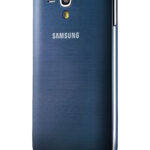
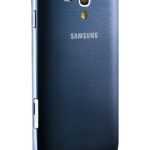
cn_GT-I8262CWACHN_006_Front_blueSamsung China officially announced the GT-I8262. The Samsung GT-I8262 is specially made for the Chinese market. This new Galaxy DUOS device runs on Android 4.1 called Jelly Bean. Samsung poured their own Touch-Wiz Nature UI skin over it. The I8262 uses a 4.3 TFT display with a resolution of 480 x 800, 5 megapixel camera, 1.2ghz dual-core processor, 768MB RAM, 4GB ROM, Bluetooth 4.0, GPS, Wi-Fi, USB and a battery of 1,700mAh. The dimensions of the new GT-I8262 are 68.2 x 128.9 x 10.7mm.
We do not expect Samsung to show this device at the Mobile World Congress 2013 in Barcelona next month, because the device is specially for the Chinese market as reported. If Samsung will show this device we will sure  make some hands-on for you later!


via source
Thanks Alexander

Display calibration software may be included on Sony Xperia Z and Sony Xperia ZL


Sony may be in the process of adding some screen calibration functions to their forthcoming Sony Xperia Z and Sony Xperia ZL smartphones. This will likely be a nice feature for those users who are interested in doing some fine tuning of the overall screen display for their device. A screen capture of the settings reveals the ability to adjust white balance, color saturation and color hue.
The screen captures come from a Sony Xperia ZL handset. Assuming the function remains available on production units, it seems likely it would also be available on the Xperia Z.
source: Xperia blog

2013 Games Preview: Rayman Legends

Rayman is back! After 2011's outstanding side-scrolling platformer, Rayman Origins, Ubisoft Montpellier returns for a direct sequel in Rayman Legends. The Wii U exclusive is one of the most wanted early 2013 games for Nintendo's new platform, and it promises to make use of the new console's unusual tablet-like controller to add an entirely new layer to the game.

What We Know:
Rayman and his pals are wandering through an enchanted forest one day when they come across a tent filled with paintings. No matter that hanging a painting from a flimsy tent wall is next to impossible. This is a video game. Get over it. It turns out that each of the paintings is actually a door into another world, with each piece of artwork offering a sense of what sort of world awaits.
As you've probably figured out from the story synopsis, Rayman Legends is built around a series of platforming levels that are accessible from each of the paintings, with different works of art leading to different kinds of worlds. One early example showed off a medieval setting, though subsequent looks suggest that the finished product will have plenty of variety. You can also expect to meet some new characters, such as Barbara the viking warrior.
The game appears to be largely the same as Rayman Origins in terms of play, with one or more players (yes, co-op returns) running, jumping, and punching their way through a series of platforming challenges in their endless pursuit of Lums and captured Teensies. In addition to the return of four-player co-op as it was in Origins, there's also the option of having a fifth player help out using the Wii U GamePad.
The GamePad-using players takes control of Murfy, using the touchscreen to alter the environment in ways that are meant to help Rayman and his platforming pals. You might, for example, use the touchscreen to cut a rope that is keeping a platform out of reach or you might simply tap on Lums to collect them for the group. Some levels incorporate rhythm-based gameplay, with timed taps on the screen making the path ahead accessible for the platformers.
What We Expect:
Unless something has gone horribly wrong with Michel Ancel and his dev team at Ubisoft Montpellier,Rayman Legends ought to be one of the early must-own Wii U titles. It'll be the second such offering from Ubisoft, after 2012's ZombiU. It's hard to say if Legends will be able to match the critical acclaim that Origins drew, but expect it to be an essential purchase for Rayman fans at the very least.

13 battery startups to watch in 2013

Here’s 13 rare battery startups working on next-generation manufacturing, chemistry and printing technologies. These battery companies could create innovation that could revolutionize electric cars, the power grid and how we charge up our gadgets and cell phones.

That’s why we wanted to take the opportunity to highlight some of the rare next-generation battery startups out there that are using nanotechnology, new printing technologies, high-powered computing, and other innovations to produce the future’s batteries. With a little luck, strong leadership, and maybe some government support, these battery startups could change the way the world stores energy. Also make sure to check out an advanced battery report(subscription required) recently published by our research service GigaOM Pro.
1). Ambri: Ambri is one of the most well known battery startups out there. Formerly called Liquid Metal Battery, the company was founded by MIT Professor Don Sadoway, who is probably the only battery startup founder ever to score an interview on The Colbert Report. It’s also got investors Bill Gates, Vinod Khosla, and oil giant Total. Ambri is developing a battery for the power grid using molten salt sandwiched between two layers of liquid metal. The battery is still at least a year and a half from commercialization.
Don Sadoway
2). Imprint Energy: Using zinc, instead of lithium, and screen printing technology, Imprint Energy has developed a battery that is ultra-thin, energy-dense, flexible, and low cost. Because the battery can be made thin and pliable, the company hopes to target companies making wearables. Imprint Energy is already making small volumes of its batteries for pilot customers, and plans to ramp up to commercial scale manufacturing in a couple years.
Imprint Energy
3). Alveo Energy: Half-year-old startup Alveo Energy is looking to develop and commercialize a battery made out of water, Prussian blue dye — which is used to color things like blue jeans, crayons and paint — iron and copper. The battery is meant to be ultra low cost and long lasting, and if successful, could help deliver breakthrough energy storage technology for the power grid. The research behind the battery was done by Stanford PhD student turned entrepreneur Colin Wessells, and Stanford Professor Professor Robert Huggins, and the company managed to snag a $4 million grant from the Department of Energy’s high risk early stage program called ARPA-E.
Alveo Energy
4). Pellion: Pellion went about finding the perfect battery chemistry in a totally disruptive way: the researchers created advanced algorithms and computer models that enabled them to test out 10,000 potential cathode materials to fit with its magnesium anode for its battery. Pellion co-founder, MIT Professor Gerbrand Ceder, also helped develop The Materials Genome Project at MIT, which is a program based on using computer modelling and virtual simulations to deliver innovation in materials. Pellion says its magnesium batteries could have very high energy density — higher than current lithium ion batteries. The startup is backed by the ARPA-E program as well as Khosla Ventures.
Pellion
5). QuantumScape: QuantumScape is an early stage stealth battery startup that is truly a product of Silicon Valley. The company is commercializing technology from Stanford University, it was founded by Infinera co-founder and CEO Jagdeep Singh, and it’s backed by Kleiner Perkins Caufield & Byers and Khosla Ventures. The company is trying to create a battery — called the all-electron battery — that has the density of fossil fuels. The technology being used is a new method for stacking trace amounts of materials together.
Jagdeep Singh
6). Envia: A year ago battery startup Envia unveiled that its lithium ion battery technology could deliver an electric car with a 300-mile range for a cost of around $25,000 to $30,000. Founded in 2007, Envia developed a low-cost cathode and then paired that with a silicon carbon anode, and a high-voltage electroloyte. The company is backed by General Motors, Japanese giant Asahi Kasei, Pangaea Ventures, Redpoint Ventures and the DOE’s ARPA-E program.
400Whkg Battery pic #2_IMG_1028
7). GELI: Startup GELI isn’t making new types of batteries, but it’s developing an operating system and software for grid batteries. Companies, building owners and utilities can buy GELI-enabled batteries and use the batteries for services like providing energy storage for solar systems, or for storing and discharging energy when the demand for energy becomes out of balance with supply.
HalfGEM_5421_552_Oi_
8). Sila Nanotechnologies: Sila Nanotechnologies was founded in 2011 by Valley entrepreneurs working with the Georgia Institute of Technology. The company is building a lighter lithium ion battery that has double the capacity of current lithium ion batteries. The company received a $1.73 million grant from the DOE.
Image (1) nov09_leaf028.jpg for post 76135
9). Boulder Ionics: Boulder Ionics is working on breakthroughs for the electrolyte part of the battery, which is the guts of the battery, where the ions flow across between the anode and the cathode. The company is developing an electrolyte made of ionic liquids that can function at high temperatures and voltages and is lower cost to make than the more standard way to make ionic liquids.
Boulder Ionics
10). Prieto Battery: The brainchild of Colorado State chemistry professor Amy Prieto, Prieto Battery is making a lithium ion battery that it says can charge in five minutes and last for five times longer than the standard lithium ion batteries. The company is leveraging nanotechnology to develop tiny copper nanowires that make up the anode of the battery, and the electrolyte is made of a solid polymer.
Prieto Battery
11). Sakti3: Sakti3 is a startup in Michigan that is building a lithium ion battery that is entirely solid state, and has a high energy density. Making it from solid polymers means it won’t have those flammable liquids and could be a lot safer for electric cars. The company is backed by Khosla Ventures, GM Ventures and Itochu.
Sakti3.2
12). Xilectric: Xilectric is re-making the “Edison Battery,” which traditionally has been a rechargeable nickel iron battery. But Xilectric is making it out of aluminum and magnesium, which it says will make it more low cost and with higher performance. The company was awarded a $1.73 million grant from the DOE.
Volt charging at mall
13). Amprius: Based on research from Stanford’s Yi Cui, Amprius is working on lithium ion batteries that use a nanostructured silicon material for the anode. The nanostructured material could shrink the anode fourfold and allow a fourfold increase in energy density. The company has raised at least $25 million from Trident Capital, VantagePoint Venture Partners, IPV Capital, Kleiner Perkins Caufield & Byers, and Eric Schmidt.
Amprius cell
Updated: This article was updated on January 14th at 10:30AM to correct the name of the show that Ambri’s founder did an interview on, from The Daily Show to The Colbert Report.


Top